An intimate, personal guide to Zakynthos’s loggerhead turtles — their world, their struggles, and how to meet them responsibly
❝ I grew up with turtles. Not as pets — as neighbours. As ancient, extraordinary neighbours who have been coming to this beach for millions of years, long before any of us arrived. I find that humbling in a way I never get tired of. ❞
The Island of the Turtles
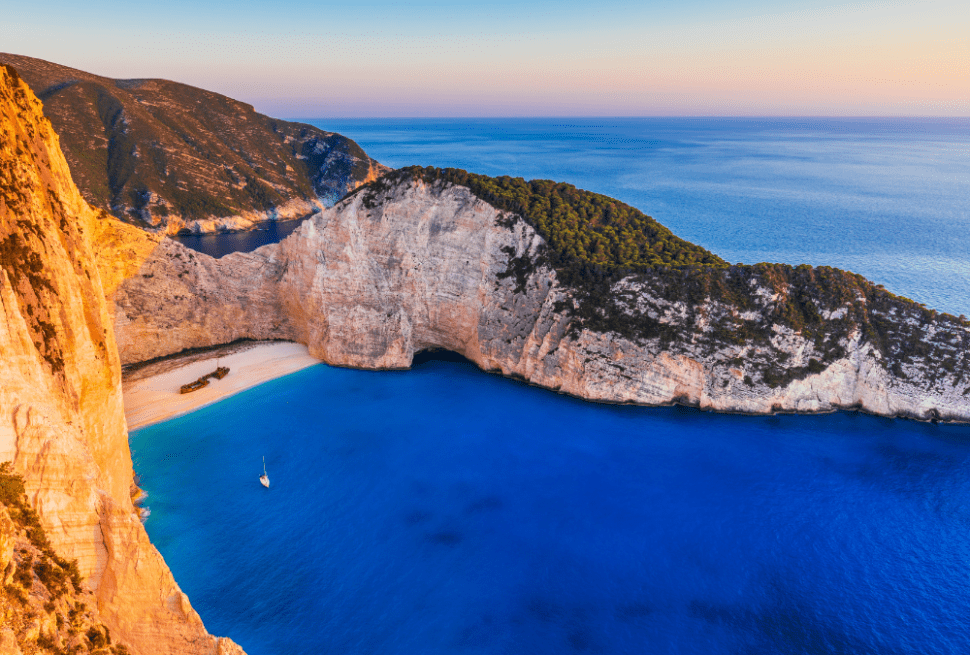
Zakynthos has many names and many identities. The Flower of the Levant, flower island of the east wind , they called it in the Venetian era, for its extraordinary natural beauty. But for those of us who live here now, the name that carries the most meaning is simpler and more powerful: the Island of the Turtles. Laganas Bay, on Zakynthos’s southern coast, is one of the most important nesting grounds in the entire Mediterranean for the loggerhead sea turtle — Caretta caretta — and the relationship between this island and this ancient creature is one of the defining stories of modern Greek conservation.
I grew up watching turtles. As a child I watched them from the boat with my parents. As a teenager I helped out with the presentation on our eco – friendly turtle spotting tour of Archelon, the Sea Turtle Protection Society of Greece, As an adult I have guided hundreds of guests to their first turtle sighting, and I have watched the same expression on every single one of their faces: pure, uncomplicated, jaw-dropping wonder. Some people cry. Many say it is the most moving thing they have experienced on the island. I understand this completely.
Meet the Caretta-Caretta: An Ancient Life
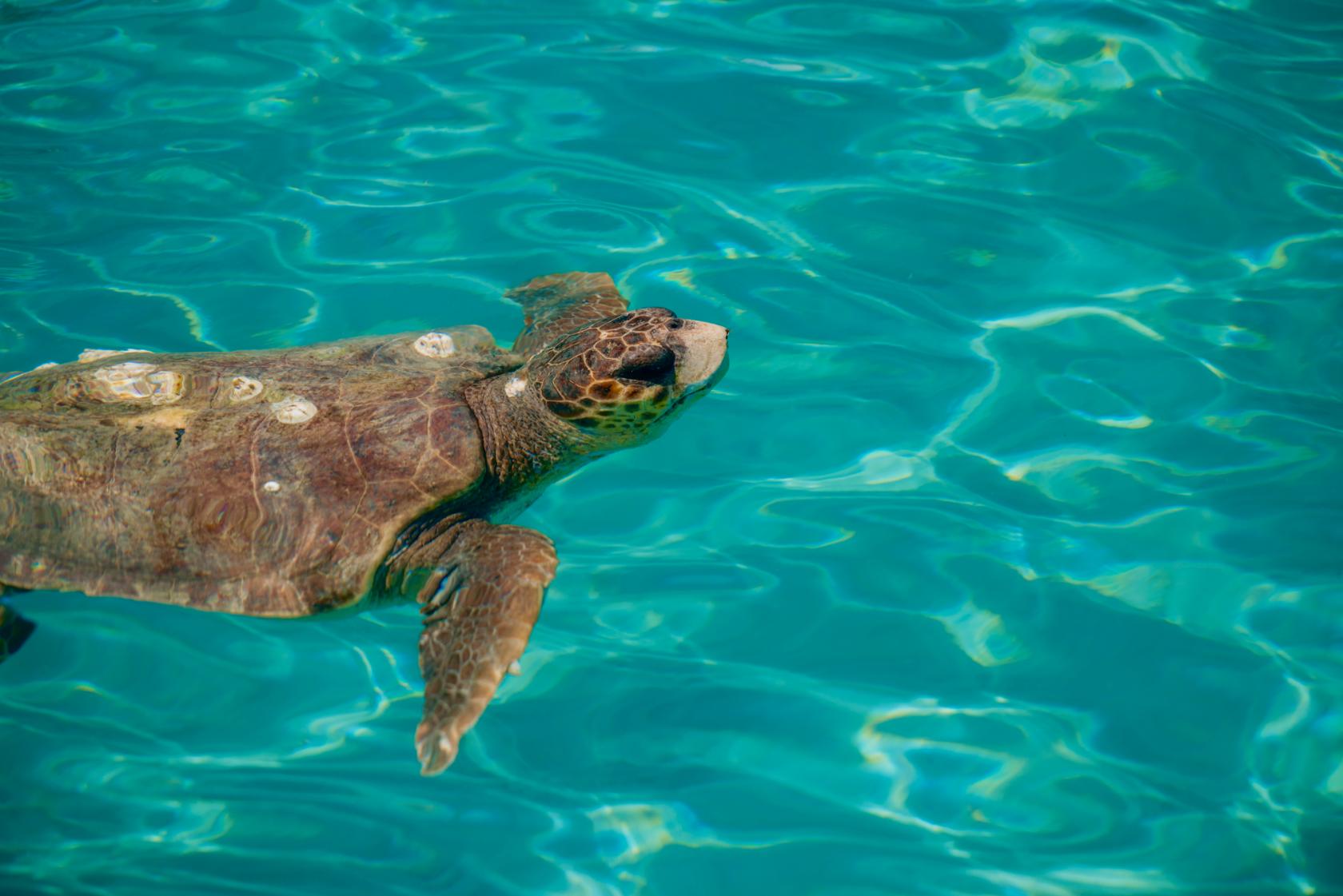
The loggerhead sea turtle is named for its disproportionately large head — a magnificent structure housing the powerful jaw muscles that allow it to crush hard-shelled prey: clams, crabs, conch, sea urchins. Adults typically weigh between 80 and 100 kilograms. They can live for more than 80 years, possibly much longer — we honestly are not certain, because the oldest turtles alive today are older than the tracking and tagging programmes that study them.
What makes the loggerhead truly extraordinary, beyond its physical magnificence, is its navigational ability. Females return to the exact beach where they were born to lay their own eggs. Not approximately the same beach — the exact one, detected by the unique magnetic signature of that stretch of coastline, which the turtle memorises at birth and carries with it through decades of ocean wandering. The turtle nesting on Gerakas Beach this summer may be the great-great-great-granddaughter of a turtle that nested on that same beach before your grandparents were born. This level of biological precision and continuity is almost impossible for the human mind to fully comprehend.
The Nesting Season: What Happens on Zakynthos's Beaches
▸ May to October: The Critical Window
Female loggerheads begin arriving in Laganas Bay in beginning of April , following their internal navigation system from feeding grounds that may be hundreds or thousands of kilometres away. Nesting peaks in June and July. A female will come ashore multiple times in a season — typically 2-3 times, at intervals of approximately 14 days — and lay between 80 and 120 eggs per nest. The eggs incubate for approximately 55-60 days, with the incubation temperature determining the sex of the hatchlings (warmer sand produces more females — an important consideration in the context of climate change).
▸ Hatching: The Race to the Sea
Hatchlings typically emerge at night in late August and September, when the sand temperature has cooled and the risk of predation is reduced. The tiny turtles — each barely larger than the palm of your hand — use the brightness of the open horizon over the sea to orient themselves and make their frantic dash to the water. They are guided by moonlight and starlight reflected on the sea surface, which is why artificial light on nesting beaches is so catastrophically damaging: it disorients the hatchlings and can send them moving away from the sea, where they die from exhaustion or predation before ever reaching the water.
The Conservation Battle: A Story of Progress and Ongoing Struggle
The conservation of Caretta-Caretta on Zakynthos has not been a simple or comfortable story. For decades, the nesting beaches of Laganas Bay were the front line of a genuine conflict between the tourism development industry , which wanted to build hotels, beach clubs and a road on the most important nesting sites, and the conservationists who understood what was being destroyed. The battles of the 1980s and 1990s were fierce, occasionally bitter, and critically important.
The establishment of the National Marine Park of Zakynthos in 1999 was a landmark victory. The park regulates access to nesting beaches, prohibits boats from entering the most critical areas of the bay, and enforces restrictions on beach furniture, lighting, and human activity during nesting season. It is not a perfect system — enforcement challenges remain, and the pressures of mass tourism are constant — but it has made a measurable positive difference to turtle nesting success on Zakynthos.
At Nefis Travel, we have always been firmly on the side of the turtles. We were the first tour operators on the island to offer eco-certified wildlife experiences, and our partnership with Archelon, the sea protection society of Greece, means that every Turtle Spotting tour we run directly contributes to the monitoring and protection of Zakynthos’s nesting population.
Our Eco-Friendly Turtle Spotting Boat Trip
In my opinion, this is one of the most special experiences we offer at Nefis Travel.
We take our guests into the protected waters of Laganas Bay aboard a quiet, comfortable boat. We move slowly, we keep our voices low, and we simply observe.
The waters of the bay are remarkably clear, often with visibility of more than ten metres. During the summer months, the Caretta Caretta loggerhead turtles can often be seen both at the surface — where they come up regularly to breathe — and just below it.
Seeing a turtle in its natural environment is a moment many guests never forget. From the boat you may notice the round shell just beneath the surface, the powerful flippers moving calmly through the water, or the turtle gently rising for air before disappearing again into the blue. There is something very special about witnessing an animal that has been swimming in our oceans for millions of years.
During the trip our guides share information about the turtles, their behaviour, their life cycle and the important work being done to protect them. We also explain how visitors can help protect these remarkable animals, both here in Zakynthos and wherever they travel.
We work closely with ARCHELON, the Greek Sea Turtle Protection Society, and support their important work on the island. Thanks to the participation of our guests, Nefis Travel helped raise nearly €20,000 last year for turtle protection on Zakynthos — a contribution we are very proud of.
Respect for the turtles always comes first. We strictly follow the regulations of the National Marine Park of Zakynthos, keeping the correct distance and observing the turtles calmly and responsibly. We are never the people chasing turtles for the perfect photograph.
For us, this experience is about something much more meaningful: sharing a beautiful moment in nature while helping to protect it.
At Nefis Travel we believe tourism can make a difference — and together with our guests, we truly do.
Nefeli's Eco Tip: If any boat operator offers to let you touch, follow, or get very close to a turtle — please say no and find a different operator. The turtles' wellbeing must always come before our desire for a better experience
How You Can Help
A few simple actions from visitors make a big difference for the turtles on Zakynthos.
On the beach
- When sitting on the beach during the day, sit close to the sea — about 3 metres from the waterline.
This lower part of the beach is the safest place because most turtle nests are buried higher up in the sand, closer to the vegetation and dunes. - Never sit or place umbrellas in the upper part of the beach, as you may unknowingly disturb a hidden turtle nest.
- Always respect the protective cages and markings placed by Archelon.
Leaving the beach in the evening
- Turtles come ashore after sunset to lay their eggs, so the beaches must be quiet and empty.
- On Kalamaki Beach, visitors must leave the beach in the evening (usually around sunset).
Always check the signs at the entrance, as the exact time can vary during the nesting season.
If you see hatchlings
- Never pick up a hatchling and carry it to the sea.
Baby turtles must crawl to the water by themselves. During this short journey they begin building strength in their muscles, especially in their flippers, which they will immediately need once they reach the sea. - This journey across the sand also serves another incredible purpose. As the hatchlings crawl towards the water, they imprint the unique magnetic field of the beach. Scientists believe this natural navigation system helps guide them across the oceans for many years — and eventually helps the females find their way back to Zakynthos to lay their own eggs decades later.
- If hatchlings are carried directly to the water, they miss both the muscle-building process and this important natural imprinting. This can leave them too weak to swim properly, and sadly some may not have the strength to stay afloat and can drown.
- Do not throw water on them or try to hurry them along. Simply give them space and allow nature to take its course.
If you see turtles in the sea
- Keep a distance of at least 10–15 metres.
- Do not touch, chase, or feed them.
- Observe quietly and respectfully.
Lights and photography
- Do not use torches, flashlights, or camera flashes near turtles or hatchlings.
Artificial light can disorient them and lead them away from the sea.
Book Our Eco-Friendly Turtle Spotting VIP Boat Trip Small groups • Marine Park certified • Supports Archelon conservation nefis-travel.com | WhatsApp: +30 6987746506